
What Waiting Another Season Actually Costs You
A garage door spring doesn't fail quietly. When it goes, it goes with a loud bang, a door that won't budge, and sometimes a dented panel or a snapped cable caught in the same moment. Push a worn spring through one more humid summer and a few more storm-pressure cycles, and you're not saving money — you're trading a planned repair for an emergency one, usually on a day when the door is stuck shut right before rain starts rolling in off the afternoon heat. Worse, a spring that lets go while someone is standing under the door, or while a car is halfway in or out, can cause real injury or vehicle damage. The good news is that springs almost always show warning signs for weeks before they fail. Here's how to find them.
The Walk-Through Checklist
Do this with the garage door closed and the opener disconnected (pull the red release cord) so you're testing the spring, not the motor. Wear gloves and don't touch the torsion spring itself — just look.
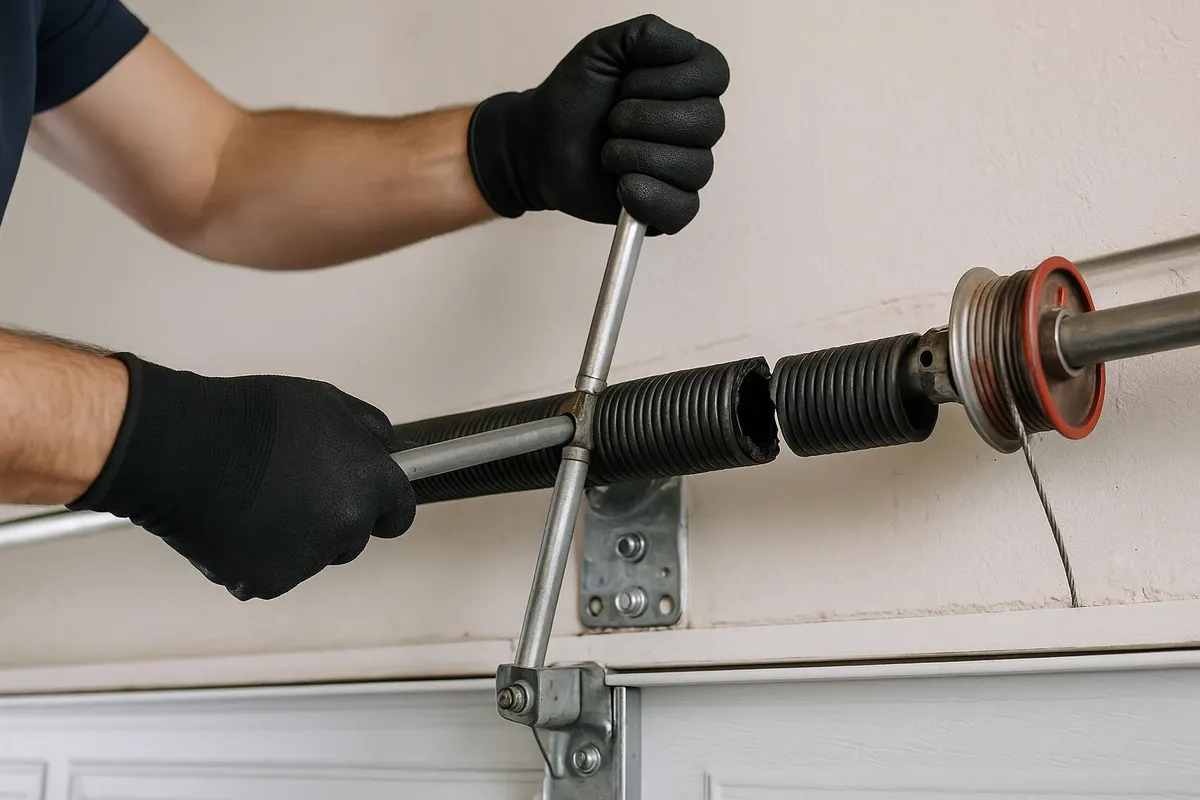
- Gap or separation in the torsion spring coils. The torsion spring sits on a bar above the door, usually one long spring or two side by side. If you see a visible gap between coils, or the spring looks stretched compared to its resting shape, it's lost tension and is working harder than it should to lift the door.
- Rust or flaking on the coils. Humidity and the occasional salt-laden breeze that reaches inland from the Gulf speed up corrosion on unprotected steel. Surface rust alone isn't an emergency, but flaking, pitting, or rust bridging across coils weakens the metal exactly where it needs strength most.
- The door feels noticeably heavier when lifted by hand. With the opener disconnected, lift the door about halfway. It should stay roughly in place and move with light effort. If it feels heavy, drops on its own, or you're straining, the spring is no longer carrying its share of the load.
- The door looks crooked or tilted as it moves. One side rising faster than the other usually means one spring (on doors with two) is weaker than its partner, or a spring on a torsion bar is out of balance. This puts uneven stress on the tracks and rollers too.
- Loud bang or pop you've heard recently. A sharp noise from the garage, even if the door still opened afterward, can mean a spring cracked under tension rather than failing all at once. Treat any unexplained bang as a reason to stop using the door until it's checked.
- Visible stretching or separated coils on extension springs. If your setup uses extension springs (the kind that run horizontally above the horizontal tracks, not a single bar), check for coils pulled apart at rest, or a spring that looks longer than its pair on the other side.
- The door drops fast or slams the last foot of travel. This is common with worn extension springs and is also why safety cables running through them matter — a snapped spring without a working safety cable can whip loose with real force.
- The opener strains, slows down, or reverses unexpectedly. A motor working significantly harder than it used to, or a door that stutters partway through its cycle, often points to a spring quietly giving up its job and shifting the load onto the opener.
- Frayed or fuzzy-looking cables near the bottom brackets or drums. Cables and springs work together under tension. Fraying here is often an early sign that the whole lift system, spring included, is under more stress than it should be.
If you check off even one or two of these, the spring isn't an emergency yet — but it's on a timeline. Hurricane-season wind-load cycling, repeated opening and closing to get vehicles in ahead of downpours, and swelling from moisture all add stress that a weakened spring handles worse than a healthy one.
When to Call Plant City Garage Door Service
Torsion springs in particular are under enough tension to cause serious injury if handled without the right bars and clamps, so this isn't a DIY swap. If your checklist turned up a gap in the coils, visible rust damage, an off-balance door, or a recent bang, call us for Garage Door Spring Repair. We'll inspect both springs (even if only one looks worn — they wear at close to the same rate and replacing both at once avoids a second service call), check the cables and drums while we're in there, and rebalance the door properly. If the opener has been straining along with the spring, we can also handle Garage Door Opener Installation if the motor's taken damage from months of overcompensating.
If you're in Plant City, Lakeland, Brandon, Valrico, Dover, Seffner, Mulberry, or Zephyrhills and any of this checklist sounded familiar, give Plant City Garage Door Service a call before the next storm system rolls through. We'll get it fixed right the first time.