
The Morning It Won't Budge
You hit the wall button on a crisp November morning and the door groans, hesitates, then creeps up like it's dragging something. Or it doesn't move at all — the opener motor hums, clicks, and the light blinks, but the door stays put. Sometimes you'll notice the bottom edge looks almost glued to the concrete, and when it finally releases there's a faint tearing sound where the rubber seal pulls free.
None of this means your garage door actually froze solid the way it might up north. Plant City doesn't get hard freezes often enough for that. What you're feeling is a combination of overnight condensation, stiffened hardware, and moisture that's been working on your door all year — cold snaps just make it obvious. Here's the order a technician works through to find out which one is yours.
What Gets Checked First — In the Order It's Checked
1. The Bottom Seal Stuck to the Slab
This is the first thing any tech looks at because it's the most common cause of a door that feels stuck but isn't actually mechanically broken. Humid air sits on a cool concrete slab overnight, and when temperatures drop even a little, that moisture condenses into a thin film right where the rubber astragal meets the floor. By morning, the seal has essentially bonded itself to the concrete with a layer of dried-on moisture.
The fix here is simple and doesn't require a service call: gently break the seal by hand before you run the opener, and switch to a seal that's rated for flexibility in temperature swings if yours has gotten stiff and cracked with age. A seal that's more than a few years old loses its pliability and grips the slab harder than a newer one would. Replacing it is a low-cost fix and worth doing before it tears and lets water under the door during the next downpour.
2. Rollers, Hinges, and Track Corrosion
If the seal isn't the issue, the next stop is the rolling hardware. Florida humidity is hard on steel rollers and hinge pins even when nothing ever technically freezes — moisture gets into the metal, surface rust forms, and the rollers start binding in the track instead of rolling smoothly. You'll hear this as a grinding or squealing sound rather than a clean glide, and the door may travel unevenly or jerk at certain points.
A technician checks each roller by hand, looking for flat spots, rust pitting, or a roller that doesn't spin freely on its stem. Light surface rust can sometimes be cleaned and re-lubricated with a silicone-based spray, but pitted rollers or bent hinges need replacing — nylon rollers with sealed bearings hold up better long-term in this climate than the bare steel kind. This is also when track alignment gets checked, since swollen wood jambs (another humidity side effect) can nudge the track just enough to cause binding that feels a lot like a frozen door.
3. Spring Tension in Cooler Air
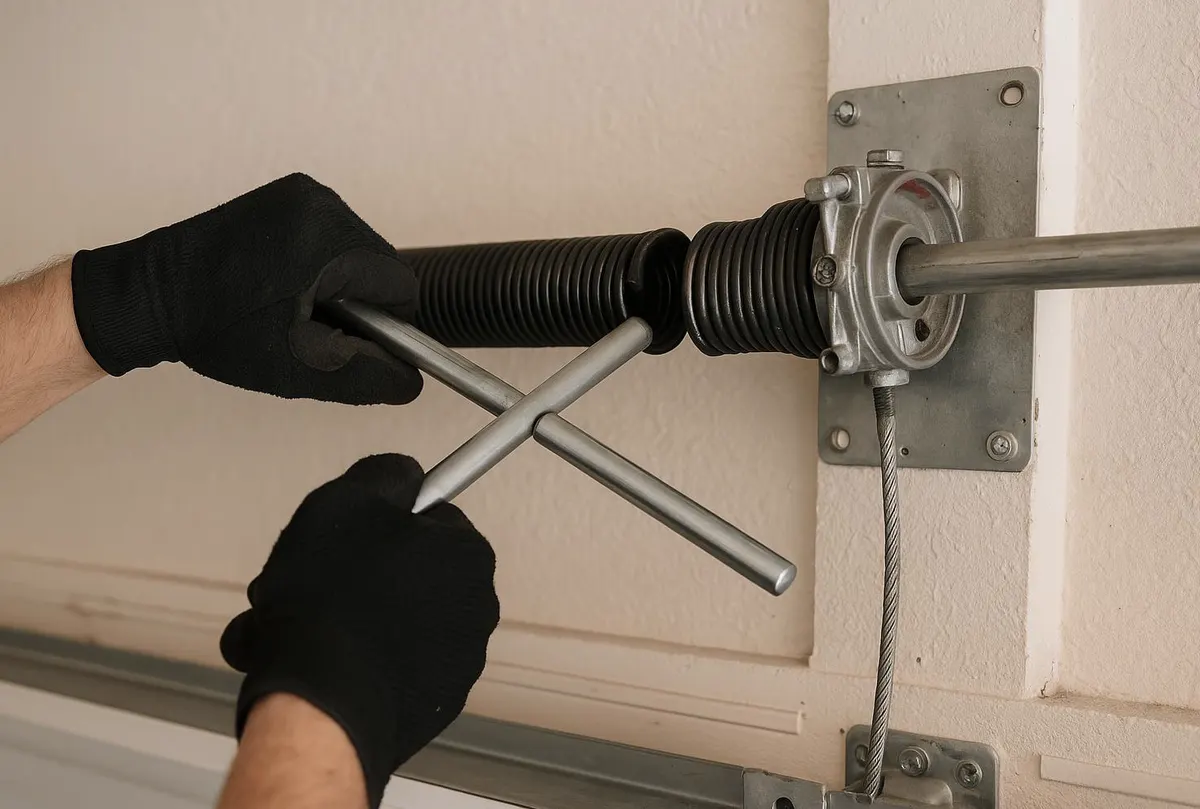
Steel springs do stiffen slightly as the temperature drops, and if your springs were already near the end of their life, a cool morning is often when that becomes noticeable. A door that worked fine in October but suddenly feels heavy in November isn't necessarily broken — it may just be showing you what was already wearing thin. A tech checks spring tension by disconnecting the opener and lifting the door by hand; it should move smoothly and hold its position about halfway open. If it slams down or feels like dead weight, tension has dropped and the springs need adjustment or replacement.
This is also where surface rust comes into play again. A spring with rust between the coils doesn't flex as evenly, which adds friction right at the point where the door needs the most help. Springs aren't something to adjust yourself — they're under heavy tension and this is squarely a job for a professional.
4. Opener Chain, Belt, and Limit Settings
Last on the list is the opener itself, because it's usually the symptom rather than the cause. Cold, thickened grease on an older chain-drive opener can make the motor strain and the door start sluggishly, and if the limit switches were set when the door moved more freely, a newly stiff door can trip the force sensors and reverse mid-travel. A tech re-lubricates the chain or belt with the right grade of lubricant and resets the open/close force limits once the actual mechanical drag — seal, rollers, or springs — has been resolved. Fixing the opener settings without fixing the underlying friction just masks the problem until it reappears.
When to Call Plant City Garage Door Service
If you've broken the seal free, sprayed the rollers, and the door still feels heavy or uneven, or if lifting it by hand shows obvious spring trouble, it's time to call. We handle Garage Door Spring Repair for doors that have lost tension from age or corrosion, and Preventive Maintenance & Tune-Ups that cover rollers, hinges, track alignment, and opener calibration in one visit — the kind of once-a-year check that catches rust and binding before a cool morning turns it into a no-go.
If your garage door in Plant City, Lakeland, Brandon, Valrico, Dover, Seffner, Mulberry, or Zephyrhills is sticking, groaning, or just not moving the way it used to, give Plant City Garage Door Service a call. We'll find the real cause and get it moving smoothly again before winter mornings make it worse.